
Your shopping cart is empty!

a fouta story
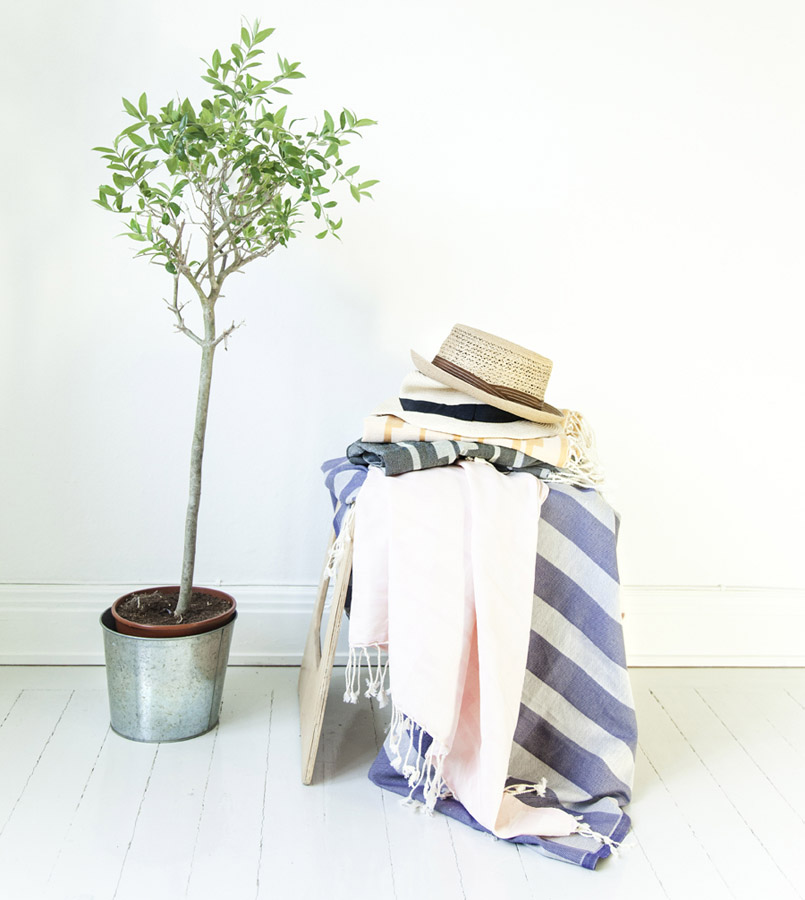
Partially a wrap, nearly a blanket, more than just a scarf. Though there’s been some discussion on what to call it, there are no doubts on the pure comfort we feel wearing it. It’s the piece your closet will thank you for.
Fouta is a multi-use towel that has been woven in Tunisia for centuries. The fouta was originally used for many different purposes in everyday life. It is as hammam towel that the fouta is best known. In a hamman, the fouta is used to cover and wrap around you when going from one room to another. The size of a Fouta is always 2 x 1 meter.
PRODUCTION
The production of our foutas is local and takes place in small ateliers. We only work with selected weaving mills where we can overlook the production and quarantee the highest quality and fairtrade conditions. Our Foutas are woven with extensive knowledge and in vibrant colors. It provids a source of income for many families and contributes to developing villages economy in Tunisia.
Read more about us here


